Given the increased complexity of processors and applications, the current generation of Operating Systems (OSs) focuses mostly on software integrity while partially neglecting the need to extract maximum performance out of the existing hardware.
Processors perform as well as OSs allow them to. A computing platform, embedded or otherwise, consists of not only physical resources – memory, CPU cores, peripherals, and buses – managed with some success by resource partitioning (virtualization), but also performance resources such as CPU cycles, clock speed, memory and I/O bandwidth, and main/cache memory space. These resources are managed by ancient methods like priority or time slices or not managed at all. As a result, processors are underutilized and consume too much energy, robbing them of their true performance potential.
Most existing management schemes are fragmented. CPU cycles are managed by priorities and temporal isolation, meaning applications that need to finish in a preset amount of time are reserved that time, whether they actually need it or not. Because execution time is not safely predictable due to cache misses, miss speculation, and I/O blocking, the reserved time is typically longer than it needs to be. To ensure that the modem stack in a smartphone receives enough CPU cycles to carry on a call, other applications might be restricted to not run concurrently. This explains why some users of an unnamed brand handset complain that when the phone rings, GPS drops.
Separate from this, power management has recently received a great deal of interest. Notice the “separate” characterization. Most deployed solutions are good at detecting idle times, use modes with slow system response, or particular applications where the CPU can run at lower clock speeds and thus save energy. For example, Intel came up with Hurry Up and Get Idle (HUGI). To understand HUGI, consider this analogy: Someone can use an Indy car at full speed to reach a destination and then park it, but perhaps using a Prius to get there just in time would be more practical. Which do you think uses less gas? Power management based on use modes has too coarse a granularity to effectively mine all energy reduction opportunities all the time.
Although embedded devices destined for industrial applications have a wide range of design requirements due to the diverse environments in which they are deployed, almost all systems need some form of wired or wireless communications capabilities. Stand-alone industrial embedded devices are relatively rare, as users now demand remote access for data collection, management, maintenance, troubleshooting, software updates, and system security. For example, businesses need to monitor and collect real-time operational or throughput statistics from individual devices to evaluate the performance of manufacturing systems and methods.
Complex embedded systems can automatically run maintenance and diagnostic routines to evaluate reductions in performance and remotely schedule hardware updates. Many remote systems also require some type of security or surveillance features to detect and possibly prevent physical or virtual attacks. The challenge for embedded designers is to find the right communications technologythat delivers reliable, high-performance connectivity in an industrial environment with possible noise, extended temperatures, shock/vibration, and interference.
High-end electronics provide drivers and passengers with in-car navigation and entertainment and information delivered over a wireless network. In fact, many car buyers today care more about the infotainment technologies embedded in the dashboard than what’s under the hood. This phenomenon is requiring additional storage space for rich multimedia data and advanced software and applications and is driving an explosive growth of both volatile and nonvolatile memories. Embedded multimedia cards are helping meet this demand in today’s memory-hungry automotives.
Automotive electronics are memory hungry
The explosive growth of infotainment systems in modern cars has a significant impact on the market demand for semiconductor memories. For 2012, the average memory content of a car was estimated to be around US$12.8, ranging from US$2.0 for low-end models to more than US$100 for fully equipped luxury vehicles. As a result, the total available market value for semiconductor memories in automotive applications is expected to reach a Compounded Annual Growth Rate (CAGR) of more than 9 percent from 2011 to 2015, well above the overall CAGR for the total memory semiconductor market, which is less than 7 percent.
Managed NAND: Ideal solution for car infotainment
New memory solutions, specifically tailored for automotive infotainment systems, are needed to provide additional storage space for rich infotainment multimedia data and advanced software and applications. An example is the embedded multimedia card device, a nonvolatile memory option (Figure 1). It has all the features needed to support navigation and infotainment applications such as detailed 3D maps, traffic monitoring, meteorological information, car radioand multimedia, e-call, and voice recognition. Embedded multimedia card memory is a standardized version of the “managed NAND” memory architecture. It is essentially a module based on a bank of nonvolatile NAND flash devices and is internally managed by an ad hocmicrocontroller (Figure 2).
Figure 1: Close-up of an embedded multimedia card device: top side view with bonding wires. The package contains everything needed to fully manage the memory independently from the NAND technology inside.
Figure 2: Schematic diagram of a traditional NAND memory compared to a managed NAND chip that already integrates intelligent functions and an ad hoc microcontroller for easier interface with the host processor.
The primary advantage to the user is that an embedded multimedia card’s memory is fully managed and independent from the NAND technology inside. As NAND flash geometries shrink, the technology becomes more complex to manage in terms of dealing with increased Error Correction Code (ECC) requirements, wear leveling, and bad block management. NAND flash is also variable in terms of road-map changes that require updates to software and perhaps even at the controller level.
Embedded multimedia card memory is backward compatible and has a standard interface so that changes to the NAND are transparent to the application. This means that developers don’t have to bother with dedicated software to manage the complexity of NAND flash. Embedded multimedia card memory uses standard interfaces, and functions are geared to match JEDEC specifications.
Micron Technology, for example, provides a wide range of densities of its Embedded MultiMedia Card (e•MMC), 4 GB to 64 GB, with an integrated 16-bit NAND controller that offers more robust management and memory optimization compared to discrete NAND devices. An evolution toward 256 GB modules has already been defined. The next step will be the development of higher-density managed NAND memory solutions like Solid State Drive (SSD) modules and higher-performance 32-bit microcontrollers. All of Micron’s e•MMC devices are available in JEDEC-standard 100-ball, 1 mm pitch and 153-ball/169-ball, 0.5 mm pitch BGA packages, easing the design and validation process that is critical to the fast pace of product development in the automotive segment.
An answer to automotive application needs
Quality is an important factor for the rapidly innovative in-vehicle infotainment electronics market, and memory is the backbone of this segment where semiconductor products must meet specific automotive-grade certifications. Accordingly, embedded multimedia cards have special features to meet automotive requirements, such as dedicated test pads for failure analysis. The NAND devices inside these modules can be accessed without going through the controller, enabling a full and comprehensive check of the memory bank.
e•MMC devices are fully operational at -40 °C to +85 °C so that data written into the memory at the lowest end of the temperature range is still valid when read at peak temperature, and vice versa. Power-loss protection is another advantage. And in the final analysis, embedded multimedia cards help enable a rich infotainment experience – and a safe ride – for driver and passengers.
AMB-N280S1, which carries Intel dual- core 1.8 GHz Atom Processor N2800. acrosser takes advantage of Atom Cedar Trail N2000 series processor in design, such as low power consumption and small footprint as former Atom series.
Intel Atom Processor N2800 provides more powerful graphic performance by less power consumption. AMB-N280S1 can support both two displays to maximum resolution 1920 x 1200. It also offers the 18-bit LVDS interface for small size LCD panel.
AMB-N280S1 Features
‧ Intel Atom N2800 1.86GHz
‧ 1 x DDR3 SO-DIMM up to 4GB
‧ 1 x VGA
‧ 1 x HDMI
‧ 1 x 18-bit LVDS
‧ 4 x USB2.0
‧ 6 x COM (5 x RS-232, 1 x RS-232/485)
‧ 2 x GbE (Realtek RTL8111E)
‧ 1 x KB/MS
‧ 1 x Mini-PCIe slots
‧ 1 x SATA
‧ 8-bit GPIO
AIV-HM76V0FL features Intel HM76 mobile chipset and FCPGA 988 socket for 3rd generation Core i mobile computer platform. AIV-HM76V0FL adopts acrosser’s expertise of design for in-vehicle applications. These designs include smart power management, high efficient thermal module, and diversity of integrated communication technology such as 4 USB 3.0, can bus, Wi-Fi, 3.5G wireless WAN, Bluetooth and GPS.
The smart power management subsystem enables user to define the power on and off sequences through software interface or BIOS setting to meet any requirement of in-vehicle applications.
AIV-HM76V0FL Features
‧ FCPGA 988 socket support Intel 3rd Generation Core i7/i5 and Celeron processors up to 45W i7-3820QM
‧ Fanless thermal design and anti-vibration industrial design
‧ HDMI/DVI/VGA video outputs
‧ Combo connector for Acrosser’s In-Vehicle monitor
‧ 4 external USB 3.0 ports
‧ CAN bus 2.0 A/B
‧ Wi-Fi, Bluetooth, 3.5G, GPS
‧ One-wire (i-Button) interface
‧ 9-32 VDC power input
‧ -20 to 60 degree C operating temperature
Acrosser also integrated two useful features to the AIV-HM76V0Fl as AR-V6100. The one-wire (i-Button) interface provides system integrators a low cost solution for driver ID, temperature and humidity sensors. And the combo connector combines VGA, audio, USB and DC 12V power output all in one connector so significantly simplify the harness between the AIV-HM76V0FL and Acrosser’s in-vehicle touch monitors.
ACM-B6360 carries on board Intel 3rd gnenration Core i7-3615QE FCBGA1023 processor which supports three independent display with multiple output : 24-bit LVDS, VGA, HDMI and one DDI interface. One PCI-E x16 Gen., 3.0 and seven PCI-Ex1 interfaces for IO expansion. ACM-B6360 and ACM-B4080 – COM Express Type 6 carrier board are available now.
1. 1 x PCI-E x16 Gen.3, 7x PCI-E x1 interfaces
2. 2 x SATAIII ports, 2 x SATAII ports
3. 4 x USB 3.0 ports, 4 x USB 2.0 ports
4. 1 x GbE, I2C, SMBus, LPC interface
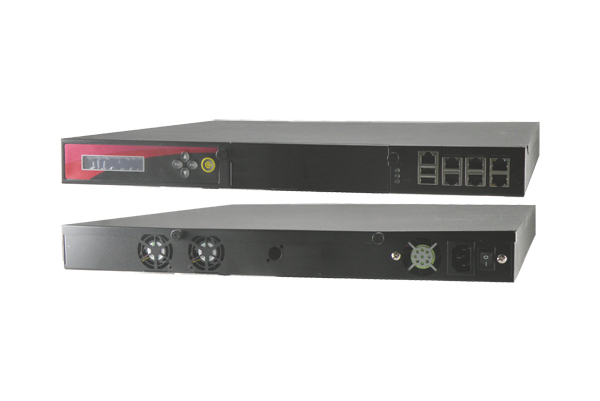
AR-R5700 Series of Networking Security Appliances based upon the Intel Q35 Chipset. It is a high performance system capable of utilizing the Core2Quad, Core2Duo, and Celeron Intel embedded processors.
AR-R5700 series has many desirable design features. The most powerful feature is the high performance Intel Q35 and ICH9R Chipset which can support Intel CPU’s up to the Core2Quad level. This is a new generation supporting CPU FSB at 1333MHz. The wide range CPU support can give you the flexibility to choose the best one for your application. Memory capacity of up to 8GB using 4 DDR2 DIMM sockets also provides for very high level performance.
With its signature fanless operation, the VIA Eden™ processor family targets personal, business, industrial and commercial embedded computing devices that require ultra low power consumption, rock solid reliability and compatibility with standard x86 operating systems and software applications.
VIA Eden processors are scalable from 400MHz to 1.5GHz all within a maximum thermal envelope of 7.5 watts, and are available with a diverse range of feature sets that enable PC functionality and connectivity from traditionally single function devices.
The VIA Eden processor family is available in nanoBGA, nanoBGA2 and EBGA packaging, using 150nm, 130nm and the latest 90nm SOI manufacturing process to deliver leading performance per watt and in fully RoHS compliant packages.
AMB-D255T1can support dual displays via VGA, HDMI or LVDS. AMB-D255T1 has one MiniPCIe type expansion slot with SIM card socket for customer’s expansion. This expansion slot works with SATA and USB signals that can be equipped with mSATA storage module, Wi-Fi module, or 3G/4G telecommunication module.
acrosser designs AMB-D255T1 as the slim type with single layer I/O ports to make the board total height less than 20mm, with external AC/DC power adaptor which is very suitable for applications with limited space likes Digital Signage, POS or thin client system.