
Using Automation To Control Assets

A good cellular automation solution based on TCP/IP networking provides anywhere/anytime connectivity and also offers security features that meet the most stringent requirements of industrial standards associations. Cellular automation is a cost-effective solution to customer problems, which integrating cellular data networking to enable SCADA data to be securely communicated from the networking back to the control center, thereby improving safety, productivity and profitability.

Today, most – if not all – remote sites contain legacy serial devices that need to be converted to IP-based services. Some of these devices require special treatment by the gateways they are attached to so that the serial interface can be properly converted to IP, but most solutions don’t offer that type of flexibility.

A cellular automation solution enables smart remote-connected sites by protecting RTUs, PLCs and other HMI equipment, while also making mission-critical data from variable frequency drives (VFDs), pumps, valves and motors securely available in near real time. This solution also eliminates costly visits to remote sites for minor software changes or failures. This translates into large savings for customers using cellular automation for remote support.


refer to:http://pipelineandgasjournal.com/using-cellular-automation-monitor-and-control-assets
Posted in Uncategorized | Tagged , , , , | Leave a comment

Machine Vision System Color

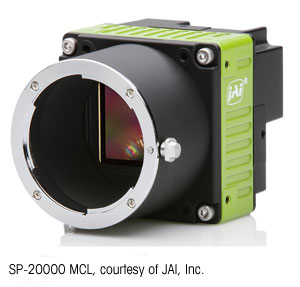
Color machine vision has its challenges.
Systems can produce three times the data (or less than one-third the resolution) of a monochrome camera solution. Color can introduce more potential sources for imaging errors, more complexity, more cost, and require careful engineering that reduces the system’s flexibility to deal with lines that make products of varying shape, colors, and size. In fact, if designers can find a way to use filters and lighting to measure a colored area using monochrome cameras, they usually do.

As the information above shows, color machine vision solutions can require in-depth knowledge of the physics behind machine vision. The good news is that by choosing the right supplier and partner, designers can solve applications where success isn’t just black and white.

refer to:http://www.visiononline.org/vision-resources-details.cfm/vision-resources/Is-Your-Machine-Vision-System-Color-Blind/content_id/4333

Posted in Uncategorized | Tagged , , , , | Leave a comment

Increased energy industry efficiency

The Situation: One of the world’s largest energy producerswith diverse operations across the globe employed remote well monitoring technology. This enabled project personnel to not only integrate and access information from the field to the desktop, but also integrate workflows across Automation, managerial and maintenance domains for consistent action.

Operational Benefits: Significant advantages included:

A single prioritized view of well operations
Real-time analysis capability for production data
Real-time feedback on well performance
Improved production and forecasting accuracy
Quick implementation as available out-of-the-box
Easily supportable and maintainable monitoring solution
Conformance and integration with corporate standards
But What Really Matters: This solution has facilitated better decision making, helping experts to take the right action at the right time to solve problems, take advantage of opportunities and improve well performance … but so what?

In this particular case, the bigger-picture business goal was time to first oil enabled by an out-of-the-box, customized solution. Even bigger than that, though, is that the refiner estimates a 4-to-6 percent production increase with real-time data monitoring and analysis.

Improvements in energy consumption

The Situation: A global industrial gas distribution companysought to manage production loads by taking advantage of variations in power prices between peak and non-peak times. It also wanted the capacity to respond quickly and according to customer product demands to reduce venting and top-up usage, as well as the ability to operate consistently at maximum and minimum load constraints. This company implemented two powerful Honeywell products powered by Matrikon, Operational Insight and Control Performance Monitor – the information infrastructure of which was tied together with Networking Appliance

refer to:
http://www.automation.com/business-transformation-through-remote-collaboration-optimization-and-operations


Posted in Uncategorized | Tagged , , , , | Leave a comment

From kindergarten to Kickstarter

Resurgence of the Do It Yourself (DIY) community has driven a range of open networking platforms, giving aspiring technologists cheap and easy access to embedded development. Outside of hobbyist toys and educational devices, however, “hacker” boards are increasing performance and I/O flexibility, and have become viable options for professional product development.

The “maker” movements of the past few years quickly gained traction in the education and hobbyist markets, as organizations began producing open hardware boards with a “less-is-more” architecture at a price to match. DIY boards like the Arduino, BeagleBoard, and Raspberry Pi provide “known state” programming platforms that allow easy exploring for novice developers, and enough flexibility for advanced hackers to create some pretty remarkable things – which they have solutions.

refer to:

http://embedded-computing.com/articles/diy-pushes-open-hardware-kindergarten-kickstarter/

Posted in Uncategorized | Tagged , , , , | Leave a comment

Leveraging IT Technology for industrial controls applications

It is the author’s opinion that integration of the controls networking and the IT networking is inevitable. It became inevitable the moment the controls industry chose to use Ethernet as the medium with which to communicate data. The controls industry may choose to be dragged kicking and screaming into the modern communications era, or it can gracefully embrace the change. Embracing means the controls industry would be able to leverage the myriad rich, existing technologies that have been proven foolproof in the IT world. To be dragged kicking and screaming into the modern automation era would do a terrible injustice to those who have worked diligently to bring it about. This could quite possibly add an entirely new facet to the fieldbus wars, which I hope have not been forgotten.

With that said, the controls world is going to be moving with an industry that has a definite consumer bias, with product development and release cycles of six months or less. In an industry where the average life expectancy of an automotive production line is eight years, it is impossible to expect the networks in an industrial setting to keep up with modern IT standards. Therefore, we turn our attention to the technologies that have existed the longest, with the most open standards and the very best support. These are the protocols we wish to use and keep, and this article highlights and explains some of these technologies.

refer to:
http://www.automation.com/leveraging-it-technology-for-industrial-controls-applications

Posted in Uncategorized | Tagged , , , , | Leave a comment

Quick quiz for your in-house engineer

If the company has someone responsible for this ongoing embedded computer task, solutions managers should be able to answer the following questions:

How well is the engineer doing their job?
How much time are they spending doing it?
How do they distribute the SDK to other team members?
If this person (or a key person on the platform team) left the company, could someone step in and take over solutions effectively?

refer to: http://embedded-computing.com/articles/the-not-code-quality/

Posted in Console server, Embedded Computer, Embedded System | Tagged | Leave a comment

Behind the vehicle infotechnic

The new Intelligent Network Interface Controller (INIC) architecture complies with Specification Rev. 3.0 and expands the audio/video capability for next generation automotive infotainment devices such as Head Units, Rear Seat Entertainment, Amplifiers, TV-Tuners and Video Displays.

Various car makers have already started with first series projects implementing this latest MOST Technology. In-Vehicle computers enables the use of a higher bandwidth of 150 Mbps, an isochronous transport mechanism to support extensive video applications, and an embedded Ethernet channel for efficient transport of IP-based packet data. It succeeds in providing significant speed enhancements and breakthroughs while keeping costs down.

refer to: http://embedded-computing.com/news/most150-series-adoption/

Posted in 1U Networking Rackmount, in-vehicle | Tagged , | Leave a comment

Parrallel processing power for GPU

Embedded products can now add the parallel processing power of the AMD Radeon 6310 GPU to their applications.  Additionally, with the support for OpenCL 1.1 and Microsoft DirectCompute, parallel processing executed by the graphics core will speed up vector processing applications such as situational awareness and video surveillance in the industrial automation, military and medical markets.  Common to all the performance levels of the new boards and modules based on the AMD Embedded G-Series platform are their discrete-level graphics capabilities. Providing support for the latest embedded products, they enhance all conventional graphics-intensive small-form-factor applications.

refer to:  http://embedded-computing.com/white-papers/white-small-form-factor-sff-designs-2/

Posted in 1U Networking Rackmount, Console server, Embedded Computer | Tagged , , | Leave a comment

Making of 4th generation Intel® Core™ processors

This whitepaper gives engineers a closer look into the architectural improvements of the new microarchitecture and delivers the answers as to how they can integrate these most efficiently into their appliances.The 4th generation Intel® Core™ processors serve the embedded computing space with a new microarchitecture which Kontron will implement on a broad range of embedded computing platforms. Based on the 22 nm Intel® 3D processor technology already used in the predecessor generation, the processors, formerly codenamed ‘Haswell’, have experienced a performance increase which will doubtlessly benefit applications.


Beside a 15% increased CPU performance especially the graphics has improved by its doubled performance in comparison to solutions based on the previous generation processors. At the same time, the thermal footprint has remained practically the same or has even shrunk.With improved processing and graphics performance as well as energy efficiency and broad scalability, the 4th generation Intel® Core™ processors with its new microarchitecture provide an attractive solution for a broad array of mid-range to high-end embedded applications in target markets such as medical,  embedded computing, industrial automation, infotainment and military.

refer to: http://embedded-computing.com/white-papers/white-intelr-coretm-processors/

Posted in Embedded Computer, Embedded System | Tagged , | Leave a comment

Announcements for embedded computer

“Qseven was defined from scratch for mobile and embedded computer carries no old legacy interfaces,” Eder continues. “The maximum power consumption for Qseven is defined at 12 W – the first definition for COM Express defined a 188 W maximum – this example clearly shows the thinking behind the specification.”

“If it is a mobile application with low to medium computing performance requirements, then Qseven is the right choice,” says Christian Eder, Marketing Manager at congatec AG headquartered in Deggendorf, Germany (www.congatec.com). “Medical systems typically require embedded computer special functionalities such as ultrasonic control or high levels of isolation in order to protect patients in case of a malfunction. Standard SBCs typically do not feature that. The logical consequence is to create a custom carrier board that takes all specific functionalities and complete it with a standard COM. Once this combination is certified, it is quite easy to upgrade or scale to other CPUs while the certification remains or just needs to be updated. This provides a lot of freedom to choose the best-fitting CPU and graphics for a given application.”

refer to: http://smallformfactors.com/articles/qseven-coms-healthcare-mobile/

Posted in Embedded Computer, Embedded System | Tagged , , | Leave a comment